
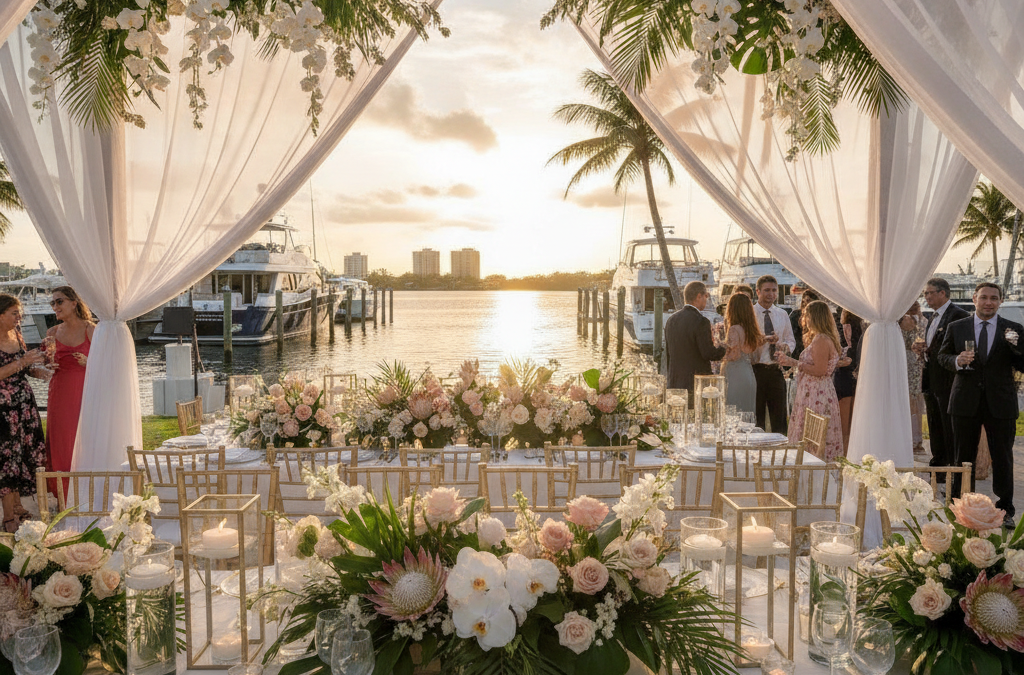
How Do You Design Florals for a Fort Lauderdale Wedding That Accounts for Humidity, Salt Air, and an Outdoor South Florida Environment?
If you’re planning an outdoor wedding in Fort Lauderdale — whether that’s a waterfront ceremony at a Harbor Beach resort, a garden celebration in Las Olas, or a sunset reception at a Pompano Beach yacht club — the environment itself is part of your design brief. South Florida’s heat, humidity, and salt-laden coastal air aren’t afterthoughts. They’re active forces that will either work with your floral design or quietly undermine it. The good news is that when you work with a designer who truly understands this climate, you can build a floral vision that’s just as breathtaking at 9 PM as it was when you walked down the aisle at 6.
This is one of the most underaddressed topics in South Florida wedding planning — and one of the most consequential. Most floral guides treat bloom selection as purely an aesthetic exercise. But in Broward County’s outdoor wedding environment, it’s also a horticultural and logistical decision that affects everything from your ceremony arch to your bridal bouquet.
Why South Florida’s Climate Demands a Different Design Approach
Fort Lauderdale sits in a subtropical climate zone where average humidity during peak wedding season — October through May — regularly hovers between 65 and 80 percent. Even in the cooler months, afternoon temperatures can climb into the mid-80s, and waterfront venues near Dania Beach, Hallandale Beach, and the Intracoastal bring an additional layer of complexity: salt air. Salt accelerates dehydration in cut flowers, dulls delicate petal surfaces, and can cause certain blooms to wilt faster than their indoor counterparts would under identical conditions.
Wind is equally important to plan around. Hanging installations, tall centerpieces, and freestanding floral arches at open waterfront venues require structural engineering that goes far beyond what most floral designers account for when they’re working exclusively in temperature-controlled ballrooms. A structure that looks elegant in a hotel event space can become a liability on a breezy dock in Hollywood.
None of this means your outdoor floral design has to be compromised. It means it has to be intentional — designed from the ground up by someone who has installed florals in these conditions dozens of times and knows exactly which blooms hold, which structures anchor, and which timelines protect your investment.
Choosing Blooms That Actually Hold in Heat and Humidity
Certain flowers are genuinely built for South Florida outdoor conditions. Others are not. Knowing the difference is one of the most valuable things a local floral designer brings to your wedding.
Flowers that perform well in Fort Lauderdale’s outdoor environment:
- Tropical and subtropical varieties — Birds of paradise, anthurium, heliconia, and tropical ginger are native to this climate. They don’t just survive it; they thrive in it. These varieties can anchor statement pieces and installations at waterfront venues without the structural concern that more delicate blooms carry.
- Orchids — Particularly cymbidium and dendrobium orchids. These are remarkably humidity-tolerant, hold their color and form throughout a long event, and lend an upscale, resort-appropriate elegance that suits Fort Lauderdale’s luxury venue landscape beautifully.
- Succulents — Often used as accent elements in bouquets, table designs, and escort displays. Succulents are essentially impervious to heat and humidity and add an architectural quality to arrangements that reads exceptionally well in photography.
- Roses with proper conditioning — Garden roses require careful pre-conditioning and cold-chain management to perform outdoors in this heat, but when sourced and handled correctly, they remain a viable choice for bouquets and centerpieces — especially in shaded or partially covered settings.
- Greenery and foliage — Monstera, palm fronds, tropical leaves, and eucalyptus (used strategically) provide structural volume that holds up well and reduces your reliance on high-maintenance blooms in critical installation pieces.
Flowers to approach carefully in outdoor settings:
- Sweet peas, ranunculus, and anemones are stunning but fragile in heat — best reserved for indoor portions of the event or morning ceremonies with quick transitions indoors.
- Lily of the valley is a classic bridal bloom that wilts rapidly in high temperatures and is better suited for a boutonnière or bouquet that moves into air conditioning quickly.
- Very light, tissue-paper-petaled blooms like Juliet roses may struggle during extended outdoor receptions — your designer should flag these during the planning phase rather than after installation.
A designer who knows your specific venue, your ceremony start time, and how long florals will be exposed to the elements can make smarter bloom selections than any online guide. Bayfront Floral & Event Design’s wedding services are built around exactly this kind of environment-first design thinking.
The Structural Side of Outdoor Floral Design That Most Designers Skip
Even the most climate-appropriate blooms won’t perform if the structures holding them aren’t designed for outdoor conditions. This is where the gap between an event florist with genuine outdoor installation experience and a general flower shop becomes most apparent — and where many South Florida couples don’t realize they’re taking on risk until it’s too late.
At waterfront venues in Harbor Beach, along the Intracoastal, and at marina properties in Hallandale Beach and Dania Beach, freestanding floral arches and ceremony backdrops need to be weighted, anchored, or staked to the ground. The same ocean breeze that makes a waterfront ceremony feel magical can turn an undersecured structure into a real problem. Professional installation at this level means arriving with the right weighted bases, securing hardware, and rigging strategy for each unique venue — not simply dropping off an arch and hoping for the best.
Hanging installations require ceiling anchor points that may or may not exist at outdoor venues, meaning your designer needs to either work within existing infrastructure or bring freestanding rigging. Tall centerpieces on outdoor tables should be weighted at the base and proportioned to reduce wind resistance. These aren’t dramatic edge cases — they’re everyday considerations for any designer doing serious outdoor work in South Florida’s waterfront event scene. Our floral installation team treats structural planning as part of the design process, not a last-minute detail.
Timing and Logistics: When Florals Are Set Up Matters As Much As What They’re Made Of
One of the most overlooked aspects of outdoor wedding floral design in Fort Lauderdale is setup timing. Florals installed at noon for a 6 PM ceremony have been sitting in South Florida heat for six hours. That’s a very different situation from florals installed at 4 PM and in place by 5:30. A designer with real outdoor experience will work backward from your ceremony and reception timeline to determine the latest responsible installation window — and will have contingency plans for days when weather accelerates the timeline unexpectedly.
Cold-chain conditioning in the days before your wedding is equally critical. Flowers that arrive to your venue already stressed from improper storage will not perform in outdoor heat regardless of how climate-tolerant they are. Proper pre-conditioning — keeping blooms at precisely the right temperature and humidity during the days before your event — is a non-negotiable part of the process for any designer doing premium outdoor work. This is a significant reason why last-minute or wire-service florals are a poor fit for outdoor South Florida events: you’re not just buying flowers, you’re buying the logistics, expertise, and environmental judgment that keep them looking perfect when it counts.
Contingency Planning for South Florida’s Unpredictable Weather
Hurricane season runs from June through November, which overlaps with the beginning of Fort Lauderdale’s popular fall wedding season. Even outside of named storms, South Florida afternoon thunderstorms are a reliable variable in outdoor event planning from May through October. Your floral designer should have a clear conversation with you — and with your venue and planner — about what happens to floral installations if weather requires a plan-B indoor setup or a ceremony delay.
This isn’t a reason to avoid outdoor weddings in South Florida. It’s a reason to work with a floral partner who has a contingency protocol: which pieces transition indoors, which are secured in place and weather-resistant enough to hold through a brief rain delay, and how the team responds on the day if conditions shift. Experience in the local market is the only thing that makes this kind of planning credible. A national agency or online flower delivery service simply cannot offer this level of on-the-ground responsiveness.
What to Ask a Floral Designer Before Booking an Outdoor South Florida Wedding
Before signing with any floral designer for an outdoor Broward County wedding, ask these questions directly:
- How do you select blooms specifically for outdoor heat and humidity at this time of year?
- How do you secure freestanding installations at waterfront or open-air venues?
- What is your setup and installation timeline for an outdoor ceremony?
- How do you condition florals in the days leading up to the event?
- What’s your weather contingency process if the event needs to shift indoors or be delayed?
The answers to these questions will tell you immediately whether you’re working with a designer who has genuine outdoor South Florida experience or one who’s offering standard floral services without a climate-specific design strategy. For couples planning their ceremony and reception florals at open-air venues across Fort Lauderdale and the surrounding area, these conversations happen at the very beginning of the design process — not as an afterthought.
Frequently Asked Questions
What flowers hold up best for an outdoor wedding in Fort Lauderdale’s heat?
Tropical varieties like orchids, anthuriums, birds of paradise, and heliconia are the most climate-resilient choices for outdoor ceremonies and receptions in South Florida. Succulents, tropical greenery, and properly conditioned roses can also perform well when setup timing and pre-event conditioning are managed correctly.
How does salt air affect wedding florals at waterfront venues in Broward County?
Salt air accelerates dehydration in cut flowers and can dull delicate petals faster than non-coastal environments. Designers working at waterfront venues in Fort Lauderdale, Hallandale Beach, and Dania Beach account for this by selecting heartier bloom varieties, minimizing the window between installation and the event, and using proper hydration techniques in the pre-event conditioning process.
Can I still have a large floral arch or hanging installation at an outdoor venue?
Yes — but it requires a designer with structural installation experience. Outdoor arches and hanging pieces at waterfront venues need appropriate anchoring, weighted bases, or rigging adapted to the specific venue infrastructure. This is a standard part of professional outdoor installation work, not an upgrade.
When should florals be installed for an outdoor evening ceremony in South Florida?
For an outdoor evening ceremony, experienced designers typically aim to install florals as close to the event start as the venue’s access timeline allows — usually no more than three to four hours before guests arrive, with ceremony pieces installed last. Your designer should work with your venue coordinator and planner to determine the optimal setup window for your specific date and conditions.
What happens to my florals if it rains on my outdoor wedding day in Fort Lauderdale?
A local floral designer with South Florida experience should have a weather contingency protocol discussed and agreed upon before your wedding day. This typically covers which installations are secured to remain outdoors through a brief delay, which pieces transition indoors if the event shifts to a covered space, and how the team responds to a last-minute venue change. Ask about this explicitly during your consultation — it should not be an afterthought.
Design Your Outdoor Wedding Florals With a Team That Knows This Environment
Outdoor weddings in Fort Lauderdale are among the most visually spectacular events this city produces — waterfront light, tropical color palettes, open skies at golden hour. Getting the florals right in this environment is the difference between a design that photographs beautifully and holds through the night, and one that quietly struggles against conditions it wasn’t designed for.
At Bayfront Floral & Event Design, every outdoor wedding we design is built around the realities of South Florida’s climate — from bloom selection and structural installation to pre-event conditioning and day-of logistics. We work closely with couples, planners, and venue coordinators to ensure the design vision and the environmental strategy are fully aligned from the first consultation through the final install.
If you’re planning an outdoor wedding in Fort Lauderdale or the surrounding area and want a design partner who has done this work at real South Florida venues in real South Florida conditions, we’d love to talk. Reach out to schedule a consultation — and let’s start building a floral design built to last through every moment of your day.