
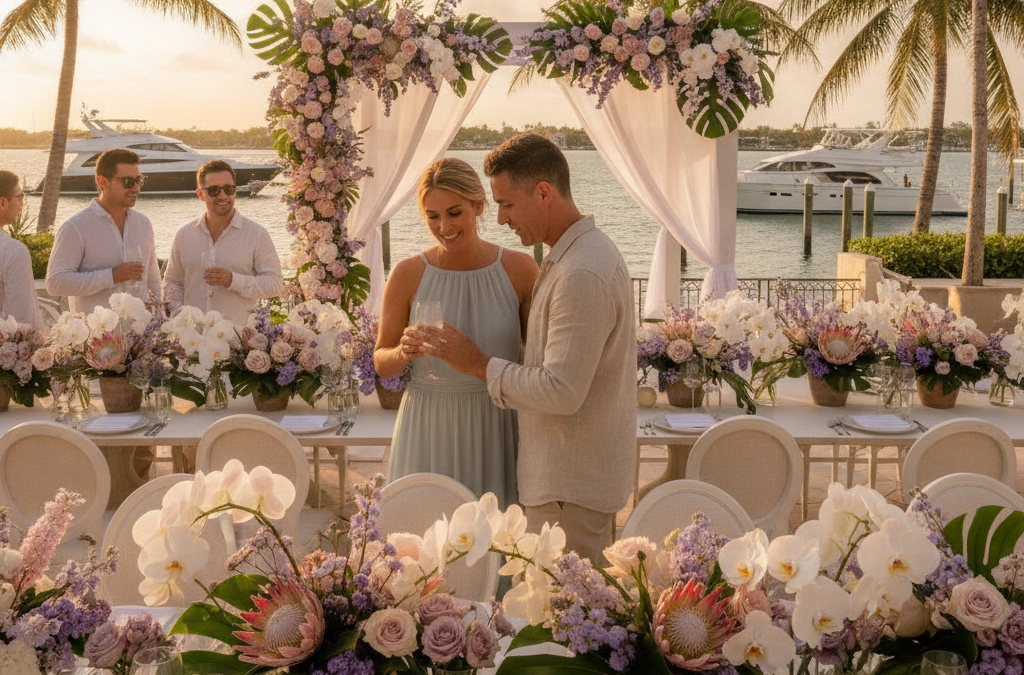
How Do You Choose the Right Flowers for a Fort Lauderdale Wedding Based on Season, Humidity, and Venue Type?
Choosing wedding flowers in Fort Lauderdale isn’t as simple as pointing to a photo on Pinterest and saying, “I want that.” The flowers that look luminous in a climate-controlled Manhattan ballroom or a Pacific Northwest garden setting may not behave the same way at a Harbor Beach ceremony in October or an open-air reception on a Pompano Beach resort terrace. South Florida has its own rules — and working with them, rather than against them, is what separates a wedding that photographs beautifully from one that actually holds together from ceremony to last dance.
This is the question most couples don’t think to ask their florist until it’s almost too late: Will these flowers actually last through my event? At Bayfront Floral & Event Design, it’s one of the first conversations we have — because the answer shapes everything from your bridal bouquet to your centerpiece design to how we sequence installation on the day itself.
Why South Florida’s Climate Changes Every Floral Decision
Fort Lauderdale’s climate is genuinely beautiful — warm, lush, and largely predictable if you know how to read it. But for florals, it introduces three variables that most national planning guides and out-of-state florists simply don’t account for.
Heat. Even during peak wedding season — roughly October through April — afternoon temperatures in Broward County can climb into the mid-80s. Direct sun during a 4 p.m. ceremony can be brutal for delicate blooms like garden roses, ranunculus, and sweet peas, which are naturally prone to wilting when exposed to sustained heat.
Humidity. South Florida’s humidity doesn’t disappear in winter — it moderates. What this means for florals is that certain flowers absorb ambient moisture and droop faster, while others are surprisingly resilient. Tropical blooms, sturdy foliage, and wax-coated stems tend to fare far better than the lush, open-faced English garden varieties that work beautifully in temperate climates.
Salt air. If you’re marrying at a waterfront venue — a Las Olas restaurant, a Harbor Beach private estate, a marina-side yacht club, or a resort along the Intracoastal — salt air is a real factor. It accelerates petal dehydration and can affect how certain arrangements hold their structure. This is especially relevant for hanging installations and ceremony arches that face open water.
Which Flowers Actually Perform Well in Fort Lauderdale Weddings
This is the section that most floral guides skip — and the one that makes the biggest practical difference for couples planning a South Florida wedding.
Strong Performers in Heat and Humidity
- Orchids — Particularly phalaenopsis and dendrobium varieties. They’re native to tropical climates and remarkably heat-stable. They also photograph elegantly and feel right at home in coastal, resort, and yacht club settings.
- Anthuriums — Waxy, long-lasting, and architecturally striking. A natural fit for modern or tropical-luxe aesthetics.
- Tropical foliage — Monstera, palm fronds, Ti leaves, and banana leaf add structural drama and are essentially built for South Florida’s climate.
- Protea — Resilient and sculptural, with a texture that photographs beautifully and holds up well outdoors.
- Succulents — Ideal for beach and garden ceremonies where a relaxed-luxury look suits the setting.
- Spray roses and garden roses (handled strategically) — With proper hydration and timing, roses absolutely work in Fort Lauderdale weddings — but they require an experienced florist who knows how to source and condition them for South Florida conditions, and when to install them relative to ceremony timing.
Flowers That Require Thoughtful Handling
- Ranunculus and sweet peas — Gorgeous but fragile in heat. Best reserved for fully air-conditioned indoor receptions or cooler morning ceremonies in Boca Raton, Deerfield Beach, or inland venues with reliable shade.
- Hydrangeas — Notorious for wilting when they can’t access water. They can work beautifully in Fort Lauderdale settings with proper mechanics and careful placement — but they’re not a candidate for extended outdoor exposure.
- Anemones and poppies — Delicate and exquisite on paper. Worth discussing timing and venue placement carefully with your designer before committing.
A skilled floral designer won’t tell you that you simply can’t have a certain flower. They’ll tell you how to use it intelligently — which placements make sense, which require climate control, and how to build a design that stays beautiful across a six-hour event.
How Venue Type Shapes Your Floral Strategy
Your venue isn’t just a backdrop — it’s a design parameter. The floral approach for an indoor ballroom at a Hallandale Beach hotel is entirely different from an open-air ceremony on a resort terrace in Pompano Beach, which is different again from a private estate wedding in Hollywood or a yacht club celebration along the Intracoastal.
Indoor Resort and Hotel Ballrooms
Climate control opens up your palette considerably. You can lean into more delicate varieties, tighter bud-stage roses, and elaborate floral installations without the same weather concerns. The design challenge here shifts from durability to scale — these spaces are large, and florals need architectural presence to read properly across a full room.
Open-Air and Waterfront Ceremony Sites
Wind, salt air, and direct sun are all in play. Ceremony arches and chuppah structures need to be physically anchored and designed with wind resistance in mind — which means the mechanics matter as much as the florals themselves. Opt for blooms with stronger stems and more closed bud stages, supplemented by resilient foliage that won’t shed petals in a coastal breeze.
Private Estates and Garden Settings
These offer the most flexibility and often the most beautiful natural context. The design approach here is about layering — complementing the existing landscape rather than fighting it — and timing installation to avoid the peak heat of the afternoon.
The Seasonal Window Every Fort Lauderdale Couple Should Understand
South Florida’s peak wedding season runs from October through April for good reason. Temperatures are milder, rainfall is less frequent, and the outdoor conditions are genuinely ideal. But this season compresses demand significantly — which means sourcing premium blooms requires advance planning and strong relationships with trusted growers and wholesalers.
Summer weddings in Fort Lauderdale are absolutely possible and can be stunning — but they require a designer who understands which flowers to lean on, how to schedule installation, and how to build contingency into the day. If you’re planning a June or August wedding along the Broward coast, having that conversation with your florist early is essential.
What to Ask Your Florist Before You Fall in Love With a Mood Board
Most couples arrive to their first consultation with a saved collection of images that represent their vision — which is a wonderful starting point. But a florist working in South Florida owes you a candid conversation about how that vision translates to your specific venue, date, and conditions. Here’s what you should expect to discuss:
- Which flowers in your inspiration images are climate-appropriate for your venue and time of year?
- What are the realistic alternatives for any blooms that won’t hold up, and how do those alternatives affect the overall look and feel?
- How does installation timing work on the day — particularly for outdoor or partially outdoor ceremonies?
- What sourcing lead time is needed to secure premium varieties during peak season, especially for destination couples planning from out of state?
- Does the florist have experience with your specific venue, or with comparable properties in Broward County?
If your florist can’t answer these questions specifically and confidently, that’s important information. Wedding floral design in Fort Lauderdale requires local expertise — not just floral talent in general.
Frequently Asked Questions
What flowers hold up best for an outdoor Fort Lauderdale beach or waterfront ceremony?
Orchids, tropical foliage, protea, anthuriums, and succulents are among the most reliable performers in open-air South Florida settings. Spray roses and garden roses work well with proper conditioning and strategic placement — and an experienced local designer will know how to incorporate them safely.
Can I have a lush, garden-style wedding look in South Florida’s climate?
Absolutely — with the right approach. A garden-style aesthetic translates beautifully to Fort Lauderdale weddings using climate-appropriate foliage, locally available tropical elements, and a smart mix of sturdy and delicate blooms. The key is working with a designer who knows which elements can carry the look and which require extra care in your specific venue and season.
How far in advance should I book a florist for a Fort Lauderdale wedding during peak season?
For October through April weddings — particularly at resort, yacht club, and waterfront venues — we recommend beginning conversations eight to twelve months out. Premium sourcing windows and peak-season demand among Broward County venues mean that early planning gives you the best access to the flowers, designers, and logistics you want.
Does the type of venue affect how much my wedding florals will cost?
Yes — scale, installation complexity, and structural requirements all factor into pricing. A large hotel ballroom may require significantly more florals to achieve visual impact than a more intimate garden ceremony space. Your designer should walk you through how your venue’s scale and layout affect the design approach and investment before you finalize your proposal.
I’m planning my Fort Lauderdale wedding from out of state. How do I make good floral decisions remotely?
Work with a local designer who has deep experience with your specific venue or comparable properties in the area — and who can consult with you virtually while giving you honest, climate-informed guidance. At Bayfront Floral & Event Design, we work with destination couples regularly and build our consultation process around making remote planning feel seamless and confident.
Start With a Conversation That’s Actually About Your Wedding
The best floral decisions aren’t made from a mood board alone — they’re made in collaboration with a designer who understands your venue, your date, your South Florida conditions, and your vision well enough to translate all of it into something real and lasting. At Bayfront Floral & Event Design, that conversation is where everything begins.
If you’re planning a wedding in Fort Lauderdale or anywhere across Broward County and want to understand exactly what’s possible — and what will actually look beautiful on your day — we’d love to connect. Reach out to schedule a consultation and let’s start building something designed specifically for you, your venue, and the South Florida setting you’ve chosen.