
What Types of Flowers Actually Hold Up at an Outdoor Wedding in South Florida?
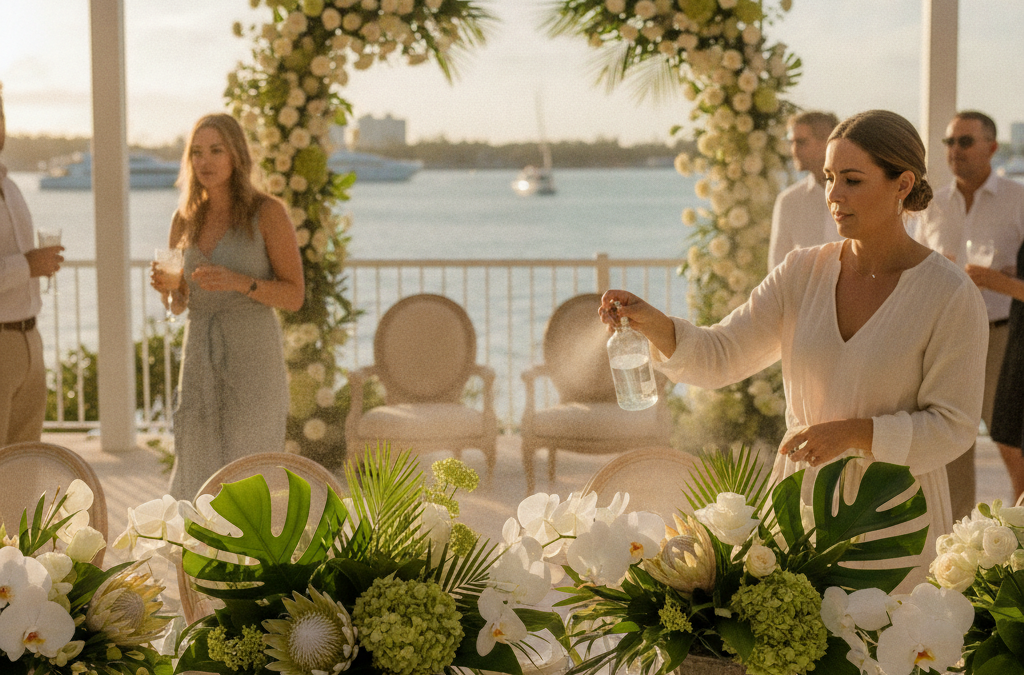
If you’re planning an outdoor wedding in Fort Lauderdale — whether on a waterfront lawn in Harbor Beach, a resort terrace in Pompano Beach, or a marina deck at a Broward County yacht club — the single most practical question you can ask your florist isn’t about color palettes or centerpiece heights. It’s this: which flowers will actually survive the day? South Florida’s combination of intense heat, near-constant humidity, and coastal salt air creates conditions that can wilt the wrong arrangements within hours. Choosing the right blooms isn’t a compromise on beauty — it’s the foundation of a design that looks stunning from your first look through your last dance.
Why South Florida Outdoor Weddings Demand a Different Approach to Floral Selection
Most floral design content online is written for temperate climates. A ranunculus that holds beautifully through a June afternoon in Charleston will begin to collapse by noon at a Hallandale Beach ceremony in October. That’s not a sourcing failure — it’s a climate reality that only a designer with genuine South Florida experience knows how to navigate.
Fort Lauderdale’s outdoor wedding season runs from October through May, and even during those cooler months, afternoon temperatures regularly reach the mid-80s, and the humidity off the Intracoastal rarely drops below 70 percent. Add direct sun, a waterfront breeze carrying salt air, and the logistical reality that flowers are often installed hours before guests arrive, and you begin to understand why bloom selection and preparation are not afterthoughts — they are the design.
A florist without deep regional experience may quote you a lush, all-garden-rose arch for a noon beach ceremony without telling you that those roses will show heat stress before the processional ends. This is one of the most significant gaps in how many local studios communicate with their clients — and it’s one worth addressing head-on.
The Flowers That Perform Best in Fort Lauderdale’s Heat and Humidity
Some varieties are simply built for this climate. A skilled designer will lean on these as the structural backbone of your florals, then layer in more delicate blooms selectively and strategically.
Orchids
Orchids — particularly phalaenopsis, dendrobium, and cymbidium varieties — are among the most heat-tolerant flowers available for South Florida weddings. They’re naturally acclimatized to tropical and subtropical growing conditions, which means they resist wilting and maintain their structure even under direct sun. For ceremony and reception flowers at waterfront venues, orchids offer both elegance and resilience. They read luxuriously in aerial installations, ceremony arches, and tablescape designs without the fragility risk of more temperate blooms.
Anthuriums
Anthuriums thrive in warm, humid environments and hold their form exceptionally well outdoors. Their glossy, architectural quality makes them a natural fit for modern and tropical-luxe design directions. At coastal venues in Dania Beach or along the Las Olas waterfront, anthuriums can anchor arrangements for six to eight hours without significant degradation — longer with proper conditioning.
Birds of Paradise and Tropical Foliages
For couples embracing the South Florida setting rather than fighting it, birds of paradise and foliage like monstera, palm fronds, and tropical greenery perform beautifully outdoors. These varieties are almost entirely immune to the heat and add dramatic sculptural dimension to ceremony arches, escort card displays, and reception tablescapes.
Succulents and Dried Elements
Succulents retain moisture internally, making them uniquely heat-resistant in arrangements. Paired with dried pampas, preserved eucalyptus, or bleached botanicals, they create a layered, editorial look that doesn’t wilt — ever. For couples hosting brunch-time ceremonies or afternoon garden parties in Boca Raton or Hollywood, this direction is worth serious consideration.
Roses, Hydrangeas, and Ranunculus — Used Strategically
These romantic favorites are not automatically off the table for South Florida outdoor events — but they require a designer who understands how to use them. Garden roses and hydrangeas are most reliably placed in shaded areas, used in smaller focal arrangements rather than large structural installs, and handled with conditioning techniques that extend their performance. A florist who tells you hydrangeas are fine anywhere at your outdoor Pompano Beach ceremony without qualification either hasn’t done many South Florida weddings or isn’t being fully transparent with you.
What Your Florist Should Be Doing Behind the Scenes
Bloom selection is only part of the equation. How your florist sources, conditions, transports, and installs your flowers matters just as much as what they order.
- Conditioning time: Properly conditioned flowers — held at the right temperature and hydration for 24 to 48 hours before the event — perform dramatically better than flowers installed directly after delivery. Ask your designer about their prep process.
- Temperature-controlled transport: Flowers traveling from a studio in Broward County to a ceremony site should arrive in climate-controlled vehicles, not a hot cargo van. This is non-negotiable for outdoor summer-adjacent events.
- Floral sealants and anti-desiccants: Professional-grade sealant sprays can extend the performance window of more delicate blooms by slowing moisture loss — especially effective on petals exposed to direct sun or coastal wind.
- Installation timing: Experienced designers know when to install. Ceremony florals placed two hours before guests arrive in full afternoon sun will not look the same as those installed 45 minutes prior. Discuss your timeline in detail.
- Contingency planning: At waterfront venues, unexpected weather is always a factor. A seasoned Fort Lauderdale floral studio will have contingency protocols — whether that’s backup blooms on-site, weighted installation anchors, or a modified design that performs under tent or open-air conditions equally well.
If you’re working with a destination florist or coordinating from out of state, these logistics conversations are even more critical. Your designer should be the one leading them, not waiting to be asked. Wedding floral design at this level is as much about operational expertise as it is about aesthetic vision.
The Bridal Bouquet Deserves Special Attention
Your bridal bouquet is the one arrangement that travels with you through the entire day — from getting ready to portraits, ceremony, and reception. For outdoor South Florida weddings, this means your bouquet needs to be both beautiful and genuinely functional in the heat.
The best approach combines heat-tolerant focal flowers like orchids or garden roses (used selectively and treated appropriately) with sturdy foliage, and is assembled with water-source mechanics inside the wrap so the stems stay hydrated throughout the day. A bouquet built purely for a studio photograph without attention to how it will hold up five hours later on a Hallandale Beach terrace is a bouquet that will let you down when it matters most.
Your bridal bouquet should be designed for your actual day — your venue, your timeline, your climate — not for an Instagram flat lay.
Frequently Asked Questions
Can I have peonies at my outdoor Fort Lauderdale wedding?
Peonies are one of the most cold-dependent flowers available and are genuinely challenging to use at outdoor South Florida events. They’re available in limited quantities during cooler months and degrade quickly in heat. A good designer can incorporate them in shaded, temperature-managed settings — like a cooled reception tent — but they’re not a wise choice for open-air ceremony arches or long-duration outdoor displays.
Do tropical flowers look too casual for a luxury wedding?
Absolutely not. Orchids, anthuriums, and tropical foliages can be designed to read as sophisticated and editorial as any all-white garden rose arrangement. It depends entirely on the curation, the palette, and the design direction. Many of the most stunning luxury waterfront weddings in Broward County lean into tropical elements in a refined, intentional way.
How much earlier should flowers be installed for an outdoor ceremony in Fort Lauderdale?
This depends on the time of day and the specific bloom selection, but a general rule is: the earlier the ceremony and the more sun exposure, the closer to the start time your installation should be completed. Your designer should build this into the day-of logistics plan — it’s a detail worth discussing explicitly during your design consultation.
What happens if there’s unexpected rain or wind at my outdoor wedding?
This is a real consideration in South Florida, especially during hurricane season (June through November). Your floral designer should have a contingency plan, including weighted or anchored structural installs, backup mechanics for wind exposure, and flexibility to adapt arrangements to an indoor or tented setting if needed. Ask your florist directly how they handle weather contingencies before you sign a contract.
Are there flowers I should specifically avoid for an outdoor beach ceremony?
Yes. Beyond peonies, flowers like sweet peas, anemones, and lily of the valley are particularly fragile in heat and humidity. Gardenias bruise easily and brown at the edges within hours of handling. A florist with South Florida experience will steer you away from these for outdoor use — or be very clear about how and where they can be incorporated safely.
Work With a Florist Who Knows What South Florida Weddings Actually Require
Designing florals for an outdoor wedding in Fort Lauderdale is not the same as designing for a ballroom in a temperate climate. The light is different, the air is different, and the stakes are higher when your ceremony is set against the Intracoastal at golden hour and every bloom needs to hold for the duration.
At Bayfront Floral & Event Design, we design specifically for the South Florida environment — the heat, the water, the salt air, and the beauty that comes with all of it. Every arrangement we create is built to last through your day, not just your photos.
If you’re planning an outdoor wedding in Fort Lauderdale or anywhere across the Broward County waterfront, we’d love to talk through your vision. Reach out to schedule a consultation — let’s design something that looks exactly as extraordinary at the end of your reception as it did when your guests first arrived.